
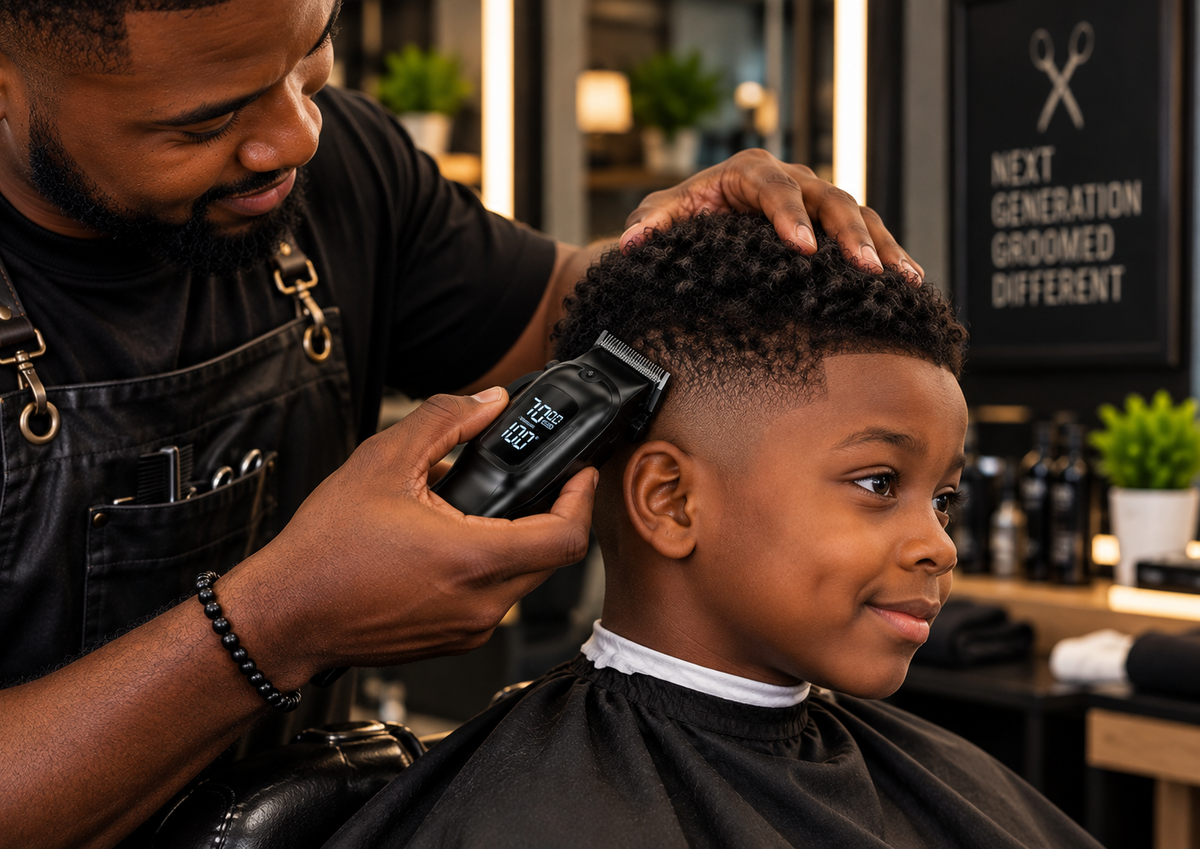
Choosing a professional hair clipper is not only about price or how powerful the motor sounds. Your hair type, preferred hairstyle, trimming routine, and level of experience all affect which clipper will work best for you.
Straight, wavy, curly, and coily hair can each respond differently during a trim. The right clipper should help you work smoothly through the hair, maintain control around the edges, and create the length you want without unnecessary pulling or repeated passes.
In this guide, we explain how to choose a professional hair clipper for your hair type and what to consider before buying one for home grooming or barbering.
What makes a hair clipper professional?

A professional hair clipper should be practical for repeated use and easy to control. Important qualities include consistent cutting performance, comfortable handling, useful length options, reliable power, and simple cleaning.
Professional does not always mean that the most expensive clipper is the right choice. It means the clipper should suit the work you need it to do. A barber may need a tool that can support several clients, while a home user may care more about easy handling, convenient storage, and simple maintenance.
First, identify your hair type
Before choosing a clipper, consider whether your hair is straight, wavy, curly, or coily. Also think about its thickness, density, length, and the style you want to maintain. Hair type is only one part of the decision, but it helps you understand what to prioritise.
Hair clippers for straight hair

Straight hair can sit close to the head, making uneven areas easier to notice. A clipper with clearly defined guard lengths can help you maintain an even cut and move gradually from a longer length to a shorter one.
If you like fades, short back-and-sides styles, or simple all-over trims, choose a clipper that gives you good control around the sides, neckline, and ears. Start with a longer guard when testing a new length, then reduce the length gradually.
Hair clippers for wavy hair

Wavy hair can appear different when it is dry compared with when it is brushed or flattened. Before trimming, decide whether you want to preserve some of the natural texture or create a shorter, more uniform shape.
For wavy hair, control matters. Work in small sections and avoid repeatedly passing over the same area. A suitable guard can help you remove length while keeping the result balanced.
Hair clippers for curly hair
Curly hair can spring back after it is cut, so the final result may look shorter than the length you saw while trimming. If you are maintaining a shaped style, use a consistent technique and check both sides regularly.
Choose a clipper that feels comfortable to guide through the hair and use a guard that gives you enough room to correct the length gradually. For a close cut, take your time around the hairline and avoid pressing the clipper too hard against the skin.
Hair clippers for coily hair

Coily hair can be dense and tightly textured, so preparation and technique are especially important. Detangle and section longer hair where necessary, then work in manageable areas instead of trying to remove too much hair at once.
A clipper for coily hair should feel steady in your hand and maintain consistent performance through the trim. Keep the blades clean and properly maintained, use the correct guard, and make controlled passes in the direction that gives you the finish you want.
Key features to look for in a professional hair clipper
1. Consistent cutting performance
A clipper should move through the hair smoothly instead of slowing down, snagging, or requiring repeated passes. Consistency is useful for both professional barbering and home grooming because it helps you work with more control.
2. The right guard and length options
Guards help you control how much hair is removed. If you maintain more than one hairstyle, choose a clipper with length options that match the cuts you regularly wear or create.
Do not assume that more guards are always better. The important thing is having the lengths you use, with guards that are easy to identify, attach, remove, and clean.
3. Corded or cordless power
A cordless clipper gives you freedom to move and can be convenient for home use or mobile barbering. A corded clipper can provide continuous use without waiting for a battery to charge.
If you choose a cordless professional hair clipper, check the stated battery runtime, charging time, and charging instructions. Frequent users may also prefer a model that can support their usual session length without interruption.
4. Comfortable handling
Weight, balance, grip, and control all matter. A clipper that feels comfortable can make it easier to work around the sides, neckline, and edges, especially during longer sessions.
5. Easy cleaning and maintenance
Hair and product residue can collect around the blades and guards. Look for a clipper that is easy to brush clean and maintain. Follow the manufacturer’s instructions for oiling, washing, and storing the clipper.
How to choose between the Syinix SHC 680 and SHC 780

The Syinix SHC 680 Professional Hair Clipper and the Syinix PowerTrim Elite SHC 780 Hair Clipper are both options to consider when you are comparing hair clippers for grooming or barbering.
The SHC 680 is positioned as a professional hair clipper made for all trims. It may suit shoppers looking for a straightforward option for regular cutting and grooming. The SHC 780 is positioned as a PowerTrim Elite model for shoppers who want to explore another Syinix option for regular, confident trimming.
When deciding between them, compare the current product information for the guard sizes, cutting settings, charging details, included accessories, and warranty or support available to you. The best model is the one that matches your hair type, preferred length, frequency of use, and budget.
Tips for getting a better cut on any hair type
- Start with clean, dry hair unless your preferred technique requires otherwise.
- Use a longer guard first, especially when trying a new style.
- Work in sections and use controlled, even passes.
- Check both sides regularly instead of waiting until the end.
- Be careful around the ears, neckline, and hairline.
- Brush hair from the blades and guards after each use.
- Oil the blades according to the manufacturer’s instructions.
- Do not force the clipper through hair if it begins to pull or slow down.
Common questions
What is the best clipper for thick hair?
The best clipper for thick hair is one that can move through your hair consistently and feels comfortable to control. Look for suitable guards, dependable power, and blades that are kept clean and maintained.
Can I use a professional hair clipper at home?
Yes. A professional hair clipper can be useful at home if you are comfortable using guards and taking your time. Start with simple trims before attempting more detailed fades or blends.
Why does my clipper pull curly or coily hair?
Pulling can happen when the blades need cleaning or oiling, the clipper is low on power, the hair is too long for the chosen guard, or the blades need attention. Work in smaller sections and check the clipper’s maintenance instructions.
Final advice
Choosing a professional hair clipper for your hair type comes down to matching the tool to your texture, preferred style, and grooming routine. Straight hair may benefit from precise length control, while wavy, curly, and coily hair often reward slower passes, good preparation, and careful guard selection.
Compare the Syinix SHC 680 and SHC 780 with the features you will actually use. Once you choose a clipper, regular cleaning, correct oiling, and patient technique will help you get a more consistent trim.
Share:
Best Hair Clippers in Ghana: What to Look for Before You Buy