
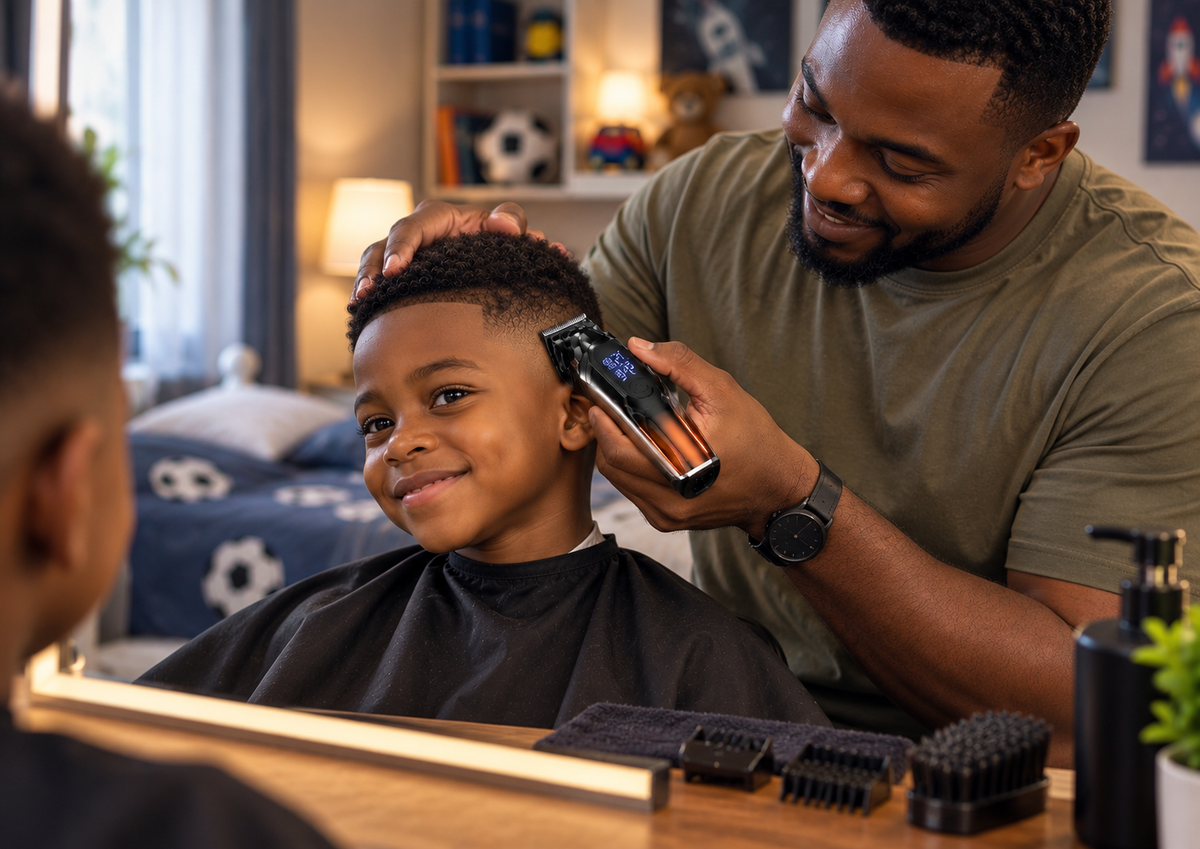
A clean fade or taper is all about control, patience, and choosing the right clipper for the job. Whether you are practising at home or looking for a better tool for your barber kit, the right technique can help you build a more even blend without rushing the cut.
This guide explains how to choose and use hair clippers for fades and tapers, how guards and taper levers work, and what to know about zero-gap clippers. If you are comparing options in Ghana, the Syinix PowerTrim Elite SHC 780 Hair Clipper is one model to consider. Check its current product listing for the specifications and accessories included.

What is the difference between a fade and a taper?
A fade gradually blends the hair from very short near the neckline or sides into more length higher up. A taper is usually a more subtle reduction in length around areas such as the sideburns and neckline, while leaving more of the overall haircut at a consistent length.
Both styles rely on a gradual transition rather than a visible step between lengths. If you are new to cutting your own hair, start with a simple taper or a longer fade before attempting a very close skin fade.
What to look for in hair clippers for fades
When choosing hair clippers for fades and tapers, focus on the features that support control and repeatable results:
- Useful guard sizes: Choose guards that cover the lengths you plan to blend. Check what is included with the clipper rather than assuming every set has the same sizes.
- Comfortable handling: A clipper that feels steady in your hand is easier to guide around the sides, back, and neckline.
- Consistent power: Smooth, steady cutting can make blending easier, particularly when you are working through thicker hair.
- Easy cleaning: Hair can build up around the blade and guards. Look for a clipper you can clean and maintain according to its instructions.
- Adjustment options: Some clippers have a taper lever that changes the blade setting for shorter transitions. Confirm whether a specific model has this feature before buying.
Terms such as “professional hair clippers,” “powerful hair clipper,” and “best hair clippers for fades” are useful starting points when comparing products, but the best clipper is the one with the features and accessories that suit your cut and experience level.
How to use hair clippers for a fade
1. Prepare the hair and tools
Start with clean, dry hair and good lighting. Set out your clipper, guards, and a hand mirror if you are trimming the back yourself. Brush or comb the hair into its natural position so you can see the shape you are working with.
2. Choose a longer guard first
If you are unsure about the final length, begin with a longer guard. You can always take off more hair, but you cannot put it back. Make a small test pass in a less visible area before trimming the whole side.
3. Create the first guideline carefully
Use your shortest planned guard to establish the lowest part of the fade. Keep the guideline even on both sides, and avoid pushing it too high. A low starting point leaves more room to blend upward.
4. Blend gradually with longer guards
Move to the next guard length and work just above the first guideline. Use short, controlled strokes and gently flick the clipper away from the head as you reach the top of each section. This helps soften the transition instead of creating another hard line.
5. Check the blend from different angles
Pause often to compare both sides and inspect the back. Use a mirror or ask someone to check areas you cannot see. If a line remains, use the guard length between the two sections, if available, and work lightly over the edge rather than cutting a larger area.
6. Finish the outline slowly
Take extra care around the ears, sideburns, and neckline. These areas are easy to make too short or uneven. Use the clipper’s appropriate guard or edging attachment, if supplied, and follow the product instructions.
Do I need a taper lever or zero-gap hair clippers?
A taper lever can make it easier to move between blade lengths without changing guards, which is helpful for fine blending. However, not every hair clipper includes a taper lever, so check the product listing and manual before you buy.
Zero-gap hair clippers are adjusted so the cutting blade sits very close to the stationary blade. This can produce a closer edge, but incorrect adjustment can increase the risk of irritation or cuts and may affect the clipper. Do not attempt to zero-gap a clipper unless the manufacturer says it is adjustable and provides safe instructions. A zero-gap setting is not necessary for a beginner to learn a basic fade.
How many clipper guards do I need for a fade?
You do not need a large clipper set to get started. Choose enough guard lengths to create a gradual transition for the style you want. More guard options can be useful for barbers or people who cut several styles, but a smaller set can work for simple home trims if the lengths suit your needs.
Check the guard sizes in the box before purchasing. If you are new to fades, practise with longer guards first and make small adjustments as you gain confidence.
Can I use one hair clipper for fades, tapers, and beard trimming?
Some people use a hair clipper for both haircutting and beard maintenance, but the right tool depends on the attachments, blade design, and finish you want. A dedicated trimmer can offer more control for detail work. Check whether the product is intended for hair, beard, or both, and do not assume a hair clipper set includes a separate trimmer.
Tips for avoiding uneven fades and hair pulling
- Use the same guard on matching sections of both sides.
- Work in small areas and check your progress often.
- Do not press too hard or rush through thick sections.
- Brush loose hair from the blades and guards during the cut.
- If the clipper pulls hair, stop and check for a low battery, hair buildup, or blades that need care.
- Oil the blades only as directed by the manufacturer.
Choosing a hair clipper in Ghana
When shopping for hair clippers in Ghana, compare the product’s listed guard sizes, power or charging details, included accessories, and care instructions. If you are in Accra, Tema, or elsewhere, check the current product page for availability and delivery information before you order.

The Syinix PowerTrim Elite SHC 780 is one option in the Syinix range. Review its product page to confirm the features that matter for your fade or taper, then compare it with other clippers based on your budget and the styles you plan to create.
Frequently asked questions
What is the best hair clipper for fades?
The best hair clipper for fades is one that gives you steady control, useful guard sizes, and the adjustment options you need. Check the exact accessories and features listed for each model.
Are zero-gap clippers better for fades?
Zero-gap adjustment can create a very close edge, but it is not required for every fade. Use it only if the clipper is designed for adjustment and you can follow the manufacturer’s safety instructions.
Why does my hair clipper leave lines?
Lines can appear when the jump between guard lengths is too large, the guideline is uneven, or the clipper is not flicked away while blending. Use intermediate lengths when possible and work over the edge of the line with light strokes.
How do I clean hair clippers after a fade?
Turn the clipper off and disconnect it from power before cleaning. Brush loose hair from the blade and guards, then follow the manufacturer’s directions for oiling and any deeper cleaning. Do not rinse or submerge the clipper unless it is specifically rated as washable.
Final takeaway
Learning to use hair clippers for fades and tapers takes practice. Start with longer guards, blend in small steps, and take your time around the hairline. Before choosing a professional hair clipper, confirm that its guard set and adjustment features match the haircut you want to create. For Syinix shoppers, the SHC 780 product page is a good place to check current model details.
Share:
Best Hair Clippers in Ghana: What to Look for Before You Buy
5 Everyday Ways to Enjoy the Syinix V60 Bluetooth Speaker